Inwood Animal Clinic Blogs

City Pets and Heartworm Disease: Frequently Asked Questions

Heartworm disease is spread by mosquitoes, making it more prevalent in warmer climates. But that doesn’t mean cities and northern regions are immune to mosquitoes or the deadly parasites they can carry. In fact, heartworm disease is a problem in all 50 states.
At Inwood Animal Clinic, we get lots of questions about heartworm disease and its impact on pet health. Here, we answer those questions, including what heartworms are, how pets become infected, and how heartworm prevention keeps your pet safe year-round.
What is heartworm disease?
Heartworm disease is caused by a parasite called Dirofilaria immitis. These worms live in the heart, lungs, and nearby blood vessels of infected animals. Dogs are the most commonly affected pets, but other animals, including cats, ferrets, foxes, and coyotes, can also develop this disease. The worms can grow to be a foot long, and dogs can host 30 or more at a time. Eventually, the worms can interfere with blood flow, causing lung damage and heart failure.
How do our pets get heartworms?
Most worms that pet owners hear about are intestinal parasites that spread from pet to pet through the environment. But heartworms are different—they spread via mosquitoes. Here’s the basic heartworm life cycle:
- A mosquito bites an infected animal that has microscopic immature heartworms, called microfilaria, in their blood.
- Over a few weeks, the microfilariae develop into infective larvae, ready to move into another host.
- The mosquito bites another animal and deposits the larvae.
- Over six to seven months, the larvae travel through the body, reach their destination, and grow into adult heartworms.
Mosquitoes can bite pets during walks at the park or inside your home. All pets are at risk of developing heartworm disease.
What are the signs of heartworm disease?
Heartworm infection can be a silent killer. It can take months or years before signs of the illness appear, which is why Inwood Animal Clinic veterinarians recommend routine testing and prevention.
As heartworm disease progresses, signs in dogs may include:
- Coughing
- Exercise intolerance (tiring easily)
- Difficulty breathing
- Weight loss
- Reduced activity
- Collapse
Infected cats may vomit, lose weight, develop asthma-like breathing problems, or—in the worst-case scenario—die suddenly.
How do veterinarians check for heartworms?
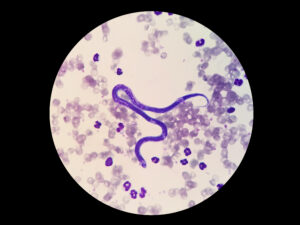 Our veterinarians can screen dogs for heartworm disease with a simple blood test. The antigen test detects proteins from adult worms, so it can take several months for the test to become positive after infection.
We recommend testing all dogs at least 6 months of age before starting prevention, at least once a year, and whenever there is a lapse in prevention.
Infected cats may have only one or two worms, compared with 30 or more in dogs, making the infection harder to detect. Routine blood tests are not usually recommended for cats unless your vet suspects an infection.
What happens if my pet gets infected?
Modern heartworm treatment is unlike treatment for other worms. Heartworms are hard to kill, and when they die, they can cause serious and potentially life-threatening inflammation. Treatment takes several months and usually includes:
- Medications to reduce inflammation and support the immune system
- Strict exercise restriction to reduce strain on the heart and lungs
- A series of injectable doses of melarsomine, the drug that kills adult heartworms
- Hospitalization to monitor for side effects and complications
In severe cases, surgical removal of worms from the heart and major blood vessels may be necessary.
For cats, there is no safe heartworm treatment. If your cat gets infected, our veterinary team can monitor their condition and provide supportive treatments until the worms die on their own.
How can I prevent heartworm disease in my pet?
Preventing heartworm disease is safer, easier, and much less expensive than treating an active heartworm infection. The main strategy we use to prevent the disease is prescription heartworm preventive medication, usually given once a month. The medication kills heartworm larvae before they become difficult-to-kill adults.
Even though mosquitoes are more prevalent in the spring and summer, the American Heartworm Society recommends that all pet owners give prevention year-round. As weather patterns become less predictable, this is the safest way to ensure no rogue worms get through.
Protecting city pets from heartworms
 Mosquitoes are everywhere, so pets in all cities and states are at risk of infection. However, routine heartworm testing and year-round prevention can keep your pet safe from this deadly disease.
Call the team at Inwood Animal Clinic to schedule a visit and learn more about heartworm disease and how to protect your pet. We offer a range of heartworm prevention products, so you can find one that fits your needs, budget, and lifestyle.